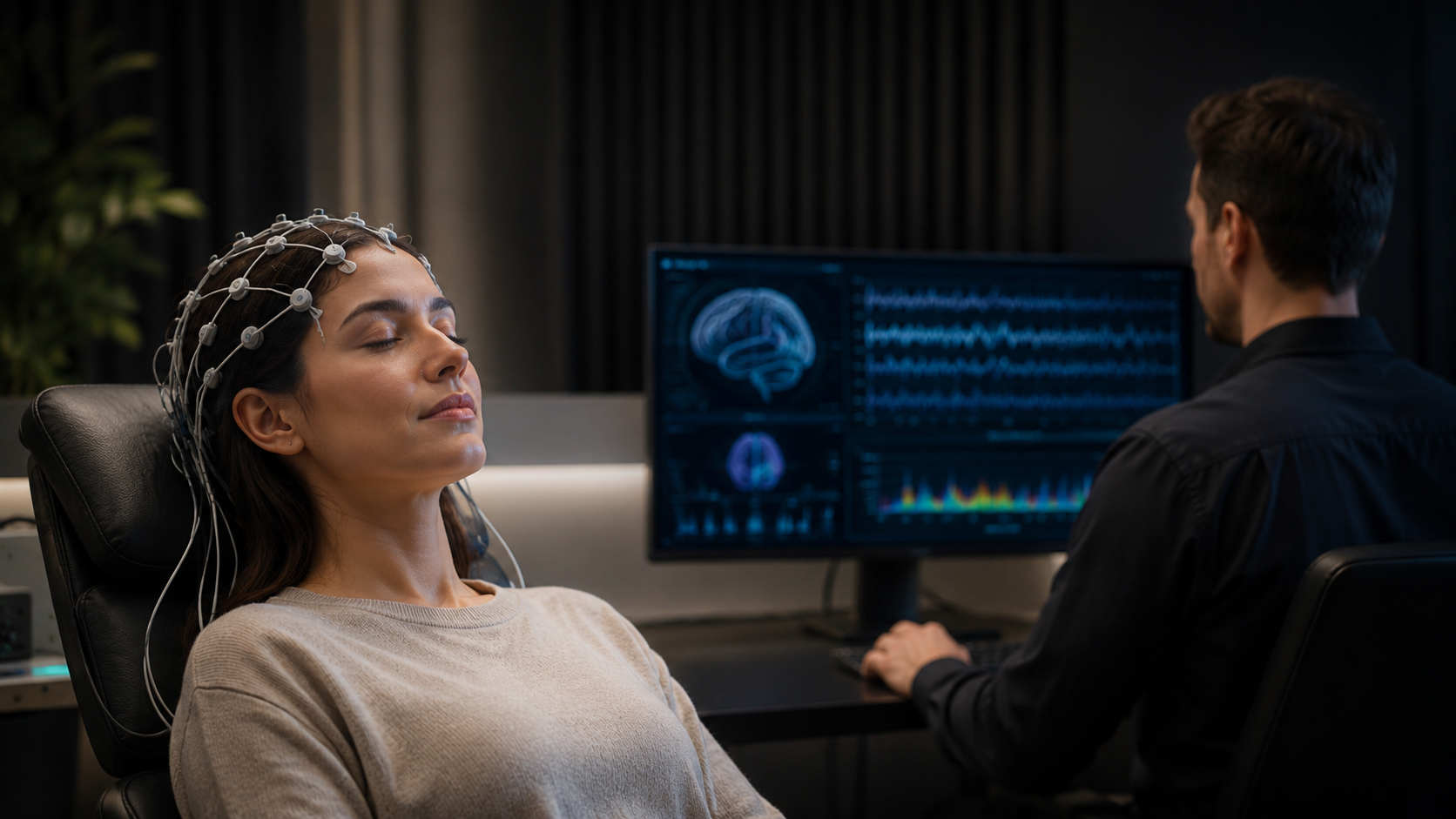
Neurofeedback is a form of brain training that uses real-time information about brain activity to create a guided learning experience. At Brain Max Wellness, EEG technology is used to observe patterns of electrical activity from the scalp while specialized software provides immediate visual or audio feedback.
The goal is not to read thoughts, control the brain, or promise a specific medical outcome. Instead, neurofeedback creates an opportunity to work toward personalized goals related to focus, regulation, recovery, mental consistency, and performance.
For many people, the technology may sound complicated at first. In practice, the experience is designed to be comfortable, non-invasive, and easy to understand.
What Is Neurofeedback?
Neurofeedback is commonly described as EEG-guided brain training.
EEG stands for electroencephalography, a technology used to observe patterns of electrical activity produced by the brain. Small sensors are placed on the scalp to collect this information.
During a neurofeedback session, the measured activity is processed by specialized software. The software can then respond with visual or audio feedback in real time.
This creates a training environment in which brain activity and feedback are connected moment by moment.
At Brain Max Wellness, the training experience can be personalized according to the individual’s goals, observations, and broader support needs.
How Does EEG Work During Brain Training?
EEG sensors are placed comfortably on specific areas of the scalp.
These sensors are designed to observe electrical activity. They do not send electricity into the brain.
The information collected by the sensors is displayed and interpreted through specialized brain-training software.
During a session, the system may monitor patterns such as:
- Changes in brain-wave activity
- Consistency of measured patterns
- Responses during different training tasks
- Activity that may be relevant to the client’s training goals
The information can then be used to help guide the neurofeedback experience.
Important to Know
EEG technology records patterns of electrical activity from the scalp.
It does not read thoughts, memories, ideas, or private mental content.
What Happens During a Neurofeedback Session?
Although each experience can be personalized, a typical brain-training session may follow a simple process.
1. Sensor Placement
Small EEG sensors are placed comfortably on the scalp.
There are no needles, surgery, or invasive procedures involved.
2. Brain Activity Is Observed
The sensors collect information about electrical activity while the client remains seated and comfortable.
3. Real-Time Feedback Begins
Specialized software responds to the EEG information.
The feedback may appear through:
- Visual changes on a screen
- Audio feedback
- Interactive activities
- Other guided training experiences
4. Personalized Training Continues
The session follows a training protocol designed around the client’s goals and observations.
As sessions continue, the experience can be reviewed and adjusted when appropriate.
Is Neurofeedback Invasive?
No. Neurofeedback brain training is generally designed as a non-invasive experience.
At Brain Max Wellness, EEG sensors are used to observe activity from the scalp.
Good to Know
- No surgery
- No needles
- No electrical stimulation from the sensors
- No medication administered during training
- Sensors observe EEG activity
- Sessions are guided by the Brain Max team
For many clients and families, understanding this can make the first session feel much more comfortable.
Why Is Personalization Important?
Everyone begins brain training with different goals.
One person may want to work toward better focus and mental consistency, while another may be interested in emotional regulation, sleep-related goals, recovery, or performance.
That is why Brain Max Wellness does not approach every client in exactly the same way.
A personalized process may consider:
- Individual goals
- Relevant background information
- EEG observations
- Session experience
- Ongoing feedback
- Progress over time
The purpose is to create a more informed training experience rather than relying on a one-size-fits-all approach.
What Goals Can People Explore With Brain Training?
People may consider neurofeedback for many different wellness and performance goals.
Focus and Attention
Some clients want to work toward:
- Sustained attention
- Mental consistency
- Organization
- Task completion
- Study performance
- Focus under pressure
Emotional Wellness
Others may explore goals related to:
- Stress regulation
- Emotional balance
- Resilience
- Calmer responses
- Mental flexibility
Sleep and Recovery
Brain-training goals may also involve:
- Rest
- Sleep consistency
- Daytime energy
- Mental fatigue
- Recovery after demanding periods
Children and Families
Parents may explore brain training when their child is working toward goals involving:
- Attention
- School performance
- Emotional regulation
- Confidence
- Sleep
- Mental consistency
Programs for younger clients should remain age-appropriate, guided, and clearly communicated with families.
Performance
Athletes, students, executives, and professionals may explore neurofeedback as part of goals involving:
- Mental endurance
- Focus under pressure
- Consistency
- Creativity
- Cognitive flexibility
- Performance preparation
Individual experiences vary, and these goals should not be interpreted as guaranteed outcomes.
Can Neurofeedback Replace Medical Care?
No.
Brain training should not be considered a replacement for appropriate medical evaluation, diagnosis, treatment, medication management, or professional healthcare advice.
If someone has a diagnosed medical, neurological, or mental health condition, decisions about treatment should be discussed with an appropriately qualified healthcare professional.
Neurofeedback may be considered as part of a broader wellness or performance plan depending on the individual’s circumstances and professional guidance.
How Many Neurofeedback Sessions Are Needed?
There is no single number that applies to everyone.
The appropriate training schedule may depend on:
- Individual goals
- Starting point
- Session frequency
- Personal circumstances
- Ongoing observations
- Response to the training experience
A consultation can help establish a more informed starting point and give clients an opportunity to ask questions about the training process.
What Makes the Brain Max Approach Different?
Brain Max Wellness combines technology with individualized human guidance.
Our approach is built around four principles.
Measurement
EEG technology provides real-time information about patterns of brain activity.
Personalization
Training protocols are shaped around individual goals rather than following the same approach for everyone.
Real-Time Feedback
Specialized software connects measured activity with immediate visual or audio feedback.
Ongoing Review
The training experience can be reviewed over time as goals, observations, and needs evolve.
Technology provides useful information, but communication and human guidance remain central to the experience.
What Should You Expect During Your First Consultation?
The first consultation is an opportunity to learn more about your goals and determine whether Brain Max Wellness may be an appropriate fit.
The conversation may include:
- Your primary concerns
- Personal goals
- Relevant background information
- Previous experiences
- Questions about EEG technology
- Expectations for brain training
There is also time to discuss what neurofeedback can and cannot do.
A clear understanding at the beginning helps create a more informed and comfortable training experience.
Key Takeaways
Neurofeedback is a non-invasive form of EEG-guided brain training that connects measured brain activity with real-time feedback.
The most important things to remember are:
- EEG sensors observe electrical activity from the scalp.
- The sensors do not read thoughts.
- Neurofeedback does not require surgery or needles.
- Real-time visual or audio feedback is used during training.
- Training can be personalized around individual goals.
- The experience may be reviewed and adjusted over time.
- Brain training is not a replacement for appropriate medical care.
Ready to Learn More?
If you are curious about neurofeedback and want to understand whether brain training may fit your goals, the first step is a conversation.
Brain Max Wellness can help you learn more about the technology, the training experience, and the personalized approach used during sessions.
Schedule a consultation to discuss your goals and learn more about Brain Max Wellness.